
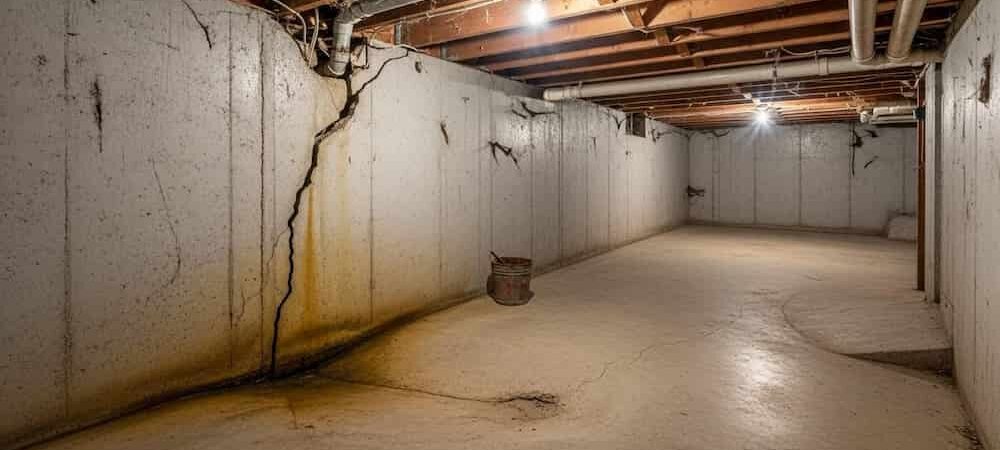
Your home’s foundation is one of its most important structural components. It supports the weight of your house, helps maintain stability, and plays a major role in protecting the structure over time.
But foundation problems aren’t always easy to recognize.
A small crack in the basement wall, a door that suddenly sticks, or a floor that feels slightly uneven might seem like ordinary signs of an aging home.
And sometimes, they are.
However, certain changes can indicate foundation movement, moisture problems, or structural conditions that deserve closer attention.
Knowing what to look for can help homeowners recognize potential issues early and make informed decisions about inspections and repairs.
Here are the most important foundation warning signs every homeowner should know.
1. Cracks in Foundation Walls
Cracks are among the most common reasons homeowners become concerned about their foundations.
The important thing to understand is that not every foundation crack indicates serious structural damage.
Concrete can crack as it cures, and minor movement can occur as building materials respond to changing conditions.
However, the location, direction, width, and progression of a crack can provide useful clues.
Hairline Cracks
Thin, stable cracks may result from concrete shrinkage or minor movement.
These are relatively common, particularly in concrete foundations.
However, even narrow cracks may require attention if they allow water to enter or continue growing.
Vertical Cracks
Vertical cracks can occur due to shrinkage or settlement.
Some may be relatively minor, while others can indicate movement or water intrusion.
Their significance depends on the surrounding conditions.
Horizontal Cracks
Horizontal cracks in basement or foundation walls deserve particular attention.
They can sometimes indicate lateral pressure from surrounding soil or water, especially when accompanied by inward wall movement.
Stair-Step Cracks
Stair-step cracks often follow mortar joints in brick or concrete block walls.
They may be associated with differential settlement or other structural movement.
Homeowner Tip: Photograph visible cracks with a ruler for scale and record the date. If a crack widens, changes direction, or appears alongside other structural symptoms, arrange a professional evaluation.
2. Doors and Windows That Stick or Won’t Close Properly
Have you noticed that a door suddenly rubs against its frame?
Or perhaps a window that once opened easily now requires considerable force?
These problems don’t automatically mean your foundation is damaged.
Humidity, worn hinges, swelling wood, and installation issues can all affect doors and windows.
However, foundation movement can sometimes cause frames to shift out of alignment.
Warning signs include:
- Doors that no longer latch properly.
- Windows that become increasingly difficult to open.
- Uneven gaps around door frames.
- Cracks appearing near window corners.
- Several doors becoming misaligned around the same time.
If these changes occur alongside uneven floors or expanding wall cracks, the possibility of structural movement deserves investigation.
What to do: Check for ordinary hardware or moisture-related causes first. If problems persist or multiple structural symptoms appear, consult a qualified professional.
3. Uneven, Sloping, or Sagging Floors
Floors should generally feel stable and adequately supported.
However, homeowners sometimes notice areas that slope, bounce excessively, or appear to sink.
Possible causes include:
- Foundation settlement.
- Deteriorated floor joists.
- Moisture-damaged structural supports.
- Inadequate framing.
- Soil movement beneath the foundation.
- Construction irregularities in older homes.
A slight slope in an older property isn’t necessarily evidence of an active structural problem.
The more important questions are whether the condition is changing, how severe it is, and whether other symptoms are present.
Signs Worth Investigating
- Floors that develop a noticeable new slope.
- Gaps between floors and baseboards.
- Sagging areas near interior walls.
- Cracked flooring associated with movement.
- Doors becoming misaligned in the same area.
Homeowner Tip: If a floor appears to be sinking or has changed noticeably, avoid adding heavy loads to the affected area until its condition has been assessed.
4. Cracks Around Doors and Windows
Cracks near the corners of doors and windows can sometimes indicate movement in the surrounding structure.
These areas are common stress points because openings interrupt the continuity of a wall.
Small cosmetic cracks may develop from normal building movement, drywall joints, or changes in temperature and humidity.
However, some patterns deserve closer attention.
For example:
- Diagonal cracks extending from window corners.
- Cracks that repeatedly reopen after repair.
- Widening gaps between walls and trim.
- Cracks appearing alongside sticking doors.
- Multiple cracks developing in nearby areas.
A single drywall crack is rarely enough to diagnose a foundation problem.
The overall pattern of changes matters more than any one symptom.
If cracks are growing or accompanied by significant movement, professional inspection may be appropriate.
5. Bowing or Leaning Basement Walls
Bowing basement walls can be a more serious warning sign.
A wall that curves or leans inward may be experiencing pressure from the surrounding soil.
This pressure can be influenced by several factors, including:
- Expansive soil conditions.
- Excessive groundwater.
- Poor exterior drainage.
- Soil movement.
- Inadequate structural resistance.
Basement walls are designed to resist certain loads, but changing conditions can sometimes create pressures beyond what the wall can safely withstand.
Signs of possible wall movement include:
- Horizontal cracking.
- Inward curvature.
- Separation at wall joints.
- Noticeable displacement.
- Cracks that widen over time.
Important: If a basement wall is visibly bowing, leaning significantly, or showing signs of substantial movement, arrange a prompt evaluation by a qualified structural engineer. Avoid entering areas that appear unstable.
The correct repair approach depends on the wall’s condition, the cause of movement, and the structure involved.
6. Water Entering the Basement
Water in a basement isn’t always caused by foundation damage.
However, recurring water intrusion can contribute to moisture-related deterioration and may indicate drainage or waterproofing problems.
Common warning signs include:
- Water collecting near basement walls.
- Damp spots after rainfall.
- White mineral deposits on masonry.
- Peeling paint.
- Musty odors.
- Mold growth.
- Water stains near floor and wall joints.
Possible causes include poor grading, clogged gutters, short downspouts, plumbing leaks, groundwater pressure, or deficiencies in waterproofing systems.
Why Moisture Matters
Persistent moisture can damage stored belongings, finishes, and certain building materials.
It can also contribute to mold growth and affect indoor air quality.
In some situations, water pressure around foundation walls may contribute to structural stress.
Homeowner Tip: Start by checking gutters, downspouts, and surface drainage. If basement water intrusion continues, seek an assessment of the underlying cause before investing in interior finishes or cosmetic repairs.
7. Gaps Between Walls, Ceilings, and Floors
Changes in the alignment of interior surfaces may sometimes indicate building movement.
Examples include:
- New gaps between walls and ceilings.
- Separation between baseboards and floors.
- Cracks at wall intersections.
- Trim pulling away from surrounding surfaces.
- Uneven gaps around built-in cabinets.
These symptoms can result from several conditions, including normal shrinkage, framing movement, moisture changes, or settlement.
A professional evaluation may be useful when gaps appear suddenly, continue increasing, or occur alongside other structural warning signs.
8. Cracks in Exterior Brickwork or Masonry
Exterior walls can also provide clues about possible foundation movement.
Brick and masonry surfaces may develop cracks for a variety of reasons.
Some are related to temperature changes or material deterioration, while others may indicate differential settlement.
Watch for:
- Stair-step cracks through mortar joints.
- Cracks that extend across multiple courses of brick.
- Gaps around exterior doors or windows.
- Sections of masonry that appear displaced.
- Cracks that continue widening.
Because masonry can be brittle, movement may become visible through cracking or separation.
However, identifying the cause requires examining the structure and surrounding conditions.
Homeowner Tip: Inspect visible exterior masonry periodically, especially after noticing new interior cracks or changes in door alignment.
9. Soil Pulling Away From the Foundation
The soil surrounding a home can influence foundation performance.
Changes in soil moisture may cause certain soils to expand or shrink.
During dry conditions, some soils can contract enough to create visible gaps near foundation walls.
During wetter periods, expansive soils may swell and exert pressure on structural components.
These conditions can be especially relevant in areas with highly expansive clay soils.
Signs to watch for include:
- Large gaps between soil and foundation walls.
- Significant changes in ground elevation.
- Poor drainage around the home.
- Water pooling near the foundation.
- Recurring movement associated with seasonal conditions.
Maintaining appropriate drainage and addressing significant soil-related concerns can be important parts of foundation maintenance.
Avoid making major grading or watering changes without understanding the site conditions, particularly if structural movement is already suspected.
10. Foundation Problems That Keep Getting Worse
One of the most important warning signs is progressive change.
A small crack that remains stable for years may be less concerning than one that grows noticeably over several weeks.
Similarly, a slightly uneven floor in an older house may not indicate active movement.
But if the slope is increasing, the situation deserves closer attention.
Changes that warrant investigation include:
- Cracks becoming wider or longer.
- New cracks appearing in several locations.
- Doors becoming progressively harder to close.
- Basement walls showing increasing displacement.
- Floors developing new slopes.
- Recurring moisture problems despite repairs.
Monitoring visible changes can help provide useful information to an inspector or engineer.
However, don’t delay professional evaluation when there are signs of significant structural distress.
How Serious Are These Foundation Warning Signs?
The following table provides a general guide. It cannot replace an on-site assessment.
| Warning Sign | What It May Indicate | Suggested Action |
|---|---|---|
| Small, stable hairline crack | Shrinkage or minor movement | Document and monitor |
| New diagonal wall crack | Possible building movement | Assess alongside other symptoms |
| Repeatedly sticking doors | Humidity, framing, or settlement | Investigate if persistent |
| Increasing floor slope | Possible support or foundation issue | Arrange professional evaluation |
| Horizontal basement wall crack | Possible lateral soil pressure | Seek structural assessment |
| Bowing foundation wall | Potential structural distress | Arrange prompt professional evaluation |
| Recurring basement flooding | Drainage or waterproofing issue | Identify and correct the source |
| Rapid structural movement | Potentially unsafe conditions | Avoid affected areas and seek urgent professional help |
The urgency of a problem depends on its severity, progression, and the overall condition of the structure.
What Should You Do If You Suspect Foundation Problems?
Discovering possible foundation damage can be stressful, especially when you’re unsure how serious the issue might be.
The best approach is to gather information before making expensive decisions.
Step 1: Document the Warning Signs
Take photographs, record dates, and note any changes.
Step 2: Look for Related Symptoms
Check whether cracks are accompanied by moisture, uneven floors, or changes in door alignment.
Step 3: Consider an Independent Inspection
For suspected structural movement, a qualified structural engineer can assess the condition and recommend appropriate next steps.
Step 4: Understand the Proposed Repair
Ask contractors to explain the cause of the problem, the proposed solution, and what the work is expected to accomplish.
Step 5: Compare Written Estimates
For non-emergency repairs, comparing detailed proposals can help you understand differences in scope, materials, warranties, and cost.
Avoid choosing a repair method based on price alone.
Can Foundation Problems Be Prevented?
Not all foundation problems can be prevented.
Soil conditions, construction methods, groundwater, and natural changes over time can all affect a home’s foundation.
However, regular maintenance may help reduce certain risks.
Consider these practices:
- Keep gutters and downspouts functioning properly.
- Direct surface water away from the home.
- Repair plumbing leaks promptly.
- Inspect accessible foundation areas periodically.
- Address recurring basement moisture.
- Monitor significant cracks or movement.
- Maintain drainage systems as recommended.
The most appropriate maintenance practices depend on your home’s design, location, and soil conditions.
Final Thoughts: Know the Signs Before Problems Become More Serious
Foundation problems can be difficult to recognize because many early symptoms resemble ordinary home maintenance issues.
A small wall crack, a sticking door, or an uneven floor doesn’t necessarily mean your home needs major repairs.
But changes that continue to worsen, occur together, or involve visible structural movement deserve attention.
By recognizing warning signs, documenting changes, and seeking qualified advice when needed, homeowners can make better-informed decisions about protecting their properties.
Better Homes, Better Living.
At Home Fix Solutions, we share practical homeowner guides, maintenance advice, and information about common home repair issues to help you better understand and care for your home.