
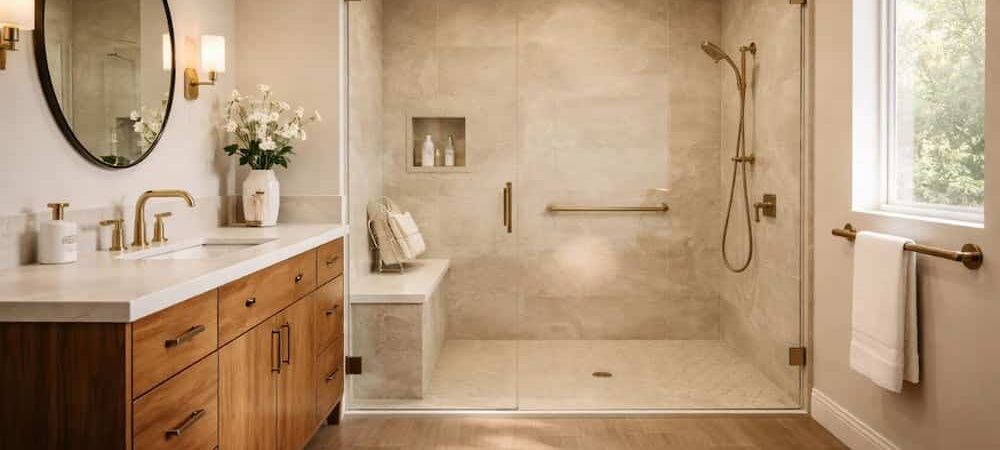
Your bathroom is one of the most frequently used rooms in your home. It’s also a space where slippery floors, limited mobility, and outdated fixtures can create unnecessary safety risks.
The good news? Making your bathroom safer doesn’t always require tearing everything out and starting over.
Sometimes, a few thoughtful improvements can make everyday routines easier, more comfortable, and more convenient.
Whether you’re updating an older bathroom, planning for the future, or simply looking to improve safety for your family, here are some bathroom upgrades worth considering.
1. Replace Your Bathtub With a Walk-In Shower
Traditional bathtubs can be difficult to enter and exit, particularly for older adults or anyone with limited mobility.
Stepping over a high bathtub wall while standing on a wet surface can increase the risk of slipping or losing balance.
That’s one reason many homeowners consider replacing their existing bathtub with a walk-in shower.
Potential benefits include:
- Easier entry and exit.
- Lower thresholds that reduce the need to step over a high edge.
- More room for comfortable movement.
- Space for grab bars and shower seating.
- A modern, practical bathroom layout.
Some walk-in showers can be designed with very low thresholds or curbless entrances, depending on the existing bathroom structure and drainage requirements.
However, not every walk-in shower is automatically safer. Proper slip-resistant flooring, drainage, waterproofing, and support features are essential.
Homeowner Tip: If you’re considering a tub-to-shower conversion, ask about the height of the shower entrance, available support features, and how the new design will manage water.
2. Install Properly Secured Grab Bars
Grab bars are one of the most practical bathroom safety improvements.
They provide additional support when entering or leaving a shower, using a bathtub, or sitting down and standing up near the toilet.
Unlike ordinary towel bars, properly installed grab bars are designed to support significant force.
Common installation locations include:
- Beside the shower entrance.
- Along shower walls.
- Near bathtubs.
- Next to toilets.
- In areas where additional balance support is needed.
Grab bars come in different finishes and designs, so they don’t necessarily have to make a bathroom look institutional.
Modern options can blend naturally with existing fixtures.
Important: Grab bars must be securely mounted to suitable structural backing or with an approved mounting system. Adhesive accessories and ordinary towel bars should not be relied on for fall protection.
3. Choose Slip-Resistant Bathroom Flooring
Wet floors are one of the most common bathroom hazards.
Water from showers, bathtubs, and sinks can make smooth surfaces slippery, especially when combined with soap residue.
If you’re planning a bathroom renovation, flooring deserves careful consideration.
Look for materials specifically rated for wet bathroom environments.
Options may include:
- Textured porcelain tiles.
- Slip-resistant ceramic tiles.
- Appropriate non-slip shower flooring.
- Water-resistant flooring designed for bathroom use.
The suitability of a material depends on where it’s installed and the manufacturer’s slip-resistance specifications.
Smaller tiles with more grout joints can sometimes provide additional traction, but tile size alone doesn’t guarantee safety.
For an existing bathroom, non-slip mats with secure backing may provide a temporary improvement, provided they remain flat and don’t create a tripping hazard.
Homeowner Tip: When comparing flooring materials, ask about their suitability for wet areas rather than choosing based on appearance alone.
4. Improve Bathroom Lighting
Good lighting is essential for bathroom safety.
Poorly lit showers, dark corners, and inadequate vanity lighting can make it harder to see wet surfaces, steps, and other obstacles.
This can be especially important during nighttime bathroom visits.
Simple improvements include:
- Brighter vanity lighting.
- Motion-activated nightlights.
- Improved overhead lighting.
- Illuminated mirrors.
- Properly positioned lighting near shower areas.
Consider using lighting that reduces harsh shadows and glare.
For bathrooms used by older adults, evenly distributed illumination can help improve visibility.
All fixtures installed in wet or damp locations should be appropriately rated and installed according to applicable electrical requirements.
5. Consider a Comfort-Height Toilet
Sitting down and standing up from a low toilet can be uncomfortable for some people.
A taller toilet may make these movements easier, particularly for individuals with certain mobility limitations.
Comfort-height toilets generally have a higher seat position than many traditional models.
However, the ideal height varies depending on a person’s stature, mobility, and physical needs.
For some users, a toilet that’s too high may actually be less comfortable or secure.
Other useful improvements include:
- Secure support bars beside the toilet.
- Adequate space for movement.
- Easy-to-operate flushing mechanisms.
- Good lighting around the toilet area.
Homeowner Tip: If accessibility is a priority, test different toilet heights before purchasing rather than assuming that taller is always better.
6. Add a Shower Seat or Built-In Bench
Standing for extended periods in the shower may be uncomfortable or difficult for some homeowners.
A shower seat can make bathing easier by providing a stable place to sit.
Common options include:
- Built-in shower benches.
- Wall-mounted folding seats.
- Freestanding shower chairs designed for wet environments.
Each option has different installation and space requirements.
A built-in bench may be incorporated during a shower remodel, while an appropriate shower chair can sometimes be added without major construction.
Whatever option you choose, stability, weight capacity, drainage, and adequate space are important considerations.
A shower seat should be suitable for the user and installed or positioned according to manufacturer instructions.
7. Upgrade Your Shower Controls and Faucets
Bathroom safety isn’t only about preventing falls.
Water temperature is another important consideration.
Sudden changes in shower temperature can cause discomfort and, in some circumstances, scalding injuries.
Pressure-balancing or thermostatic shower valves can help manage unexpected temperature fluctuations when properly selected and installed.
Other practical improvements include:
- Lever-style faucet handles.
- Easy-to-reach shower controls.
- Handheld showerheads.
- Clearly marked hot and cold controls.
- Properly adjusted water-temperature limits.
These features may be particularly useful in homes with children, older adults, or people who have difficulty operating traditional fixtures.
A qualified plumber can help determine which upgrades are compatible with your existing plumbing system.
8. Improve Storage and Reduce Clutter
Bathroom clutter can create unnecessary hazards.
Shampoo bottles on the shower floor, loose towels, and toiletries scattered across countertops can make everyday routines less convenient.
Simple storage upgrades can help keep frequently used items organized and accessible.
Consider:
- Recessed shower niches.
- Wall-mounted shelves.
- Drawer organizers.
- Easy-access bathroom cabinets.
- Secure towel hooks.
- Storage placed within comfortable reach.
Try to avoid storage arrangements that require excessive bending, stretching, or climbing.
A well-organized bathroom is easier to use and maintain.
9. Address Moisture and Ventilation Problems
Bathrooms naturally produce moisture, but excessive humidity can lead to problems over time.
Poor ventilation may contribute to condensation, peeling paint, unpleasant odors, and mold growth.
These issues can affect both the condition of the bathroom and indoor comfort.
Helpful improvements include:
- Installing or maintaining a properly vented bathroom exhaust fan.
- Repairing leaking faucets and plumbing connections.
- Replacing damaged caulking where appropriate.
- Checking for water intrusion around showers and tubs.
- Allowing wet surfaces to dry.
If you notice recurring mold, soft flooring, or persistent moisture behind bathroom fixtures, investigate the underlying cause.
Simply repainting damaged surfaces without addressing the moisture source is unlikely to provide a lasting solution.
Homeowner Tip: A bathroom exhaust fan should discharge moisture outdoors, not into an attic or enclosed wall cavity.
10. Plan Bathroom Improvements With Long-Term Comfort in Mind
A bathroom renovation is an opportunity to think beyond appearance.
Consider how the space will function over the coming years.
For example, a homeowner may choose wider clearances, accessible shower controls, or additional structural backing for future grab bar installation.
These features can sometimes be incorporated more easily during an existing remodel than added later.
Other considerations include:
- Door widths and opening direction.
- Clear floor space around fixtures.
- Accessible storage.
- Slip-resistant surfaces.
- Adequate lighting.
- Shower and toilet support features.
The goal is to create a bathroom that works well for the people using it, both now and in the future.
Which Bathroom Upgrades Should You Prioritize?
Not every homeowner needs a complete bathroom renovation.
The best starting point depends on the condition of your bathroom, your household’s needs, and your available budget.
| Improvement | Main Benefit | Typical Project Scope |
|---|---|---|
| Better lighting | Improved visibility | Small upgrade |
| Properly installed grab bars | Additional stability | Small to moderate upgrade |
| Slip-resistant flooring | Reduced slipping hazards | Moderate renovation |
| Handheld showerhead | Easier shower use | Small upgrade |
| Walk-in shower | Improved access | Larger renovation |
| Shower seating | Greater comfort and support | Small to larger upgrade |
| Improved ventilation | Better moisture management | Small to moderate upgrade |
Project scope can vary significantly depending on existing conditions, installation requirements, and local building codes.
Before committing to a major renovation, compare written estimates and ask contractors about waterproofing, accessibility, warranties, and the materials they recommend.
Final Thoughts: A Safer Bathroom Can Make Everyday Living Easier
A safer bathroom doesn’t have to sacrifice style or comfort.
With thoughtful improvements, homeowners can create spaces that are easier to use, more convenient to maintain, and better suited to everyday needs.
From improved lighting and secure grab bars to walk-in showers and slip-resistant flooring, even relatively small changes can make a meaningful difference.
Start by identifying the features that create the most difficulty or risk in your current bathroom.
Then explore improvements that address those needs while fitting your budget and long-term plans.
Better Homes, Better Living.
At Home Fix Solutions, we share practical renovation ideas, bathroom improvement tips, and homeowner guides to help you make informed decisions about your home.